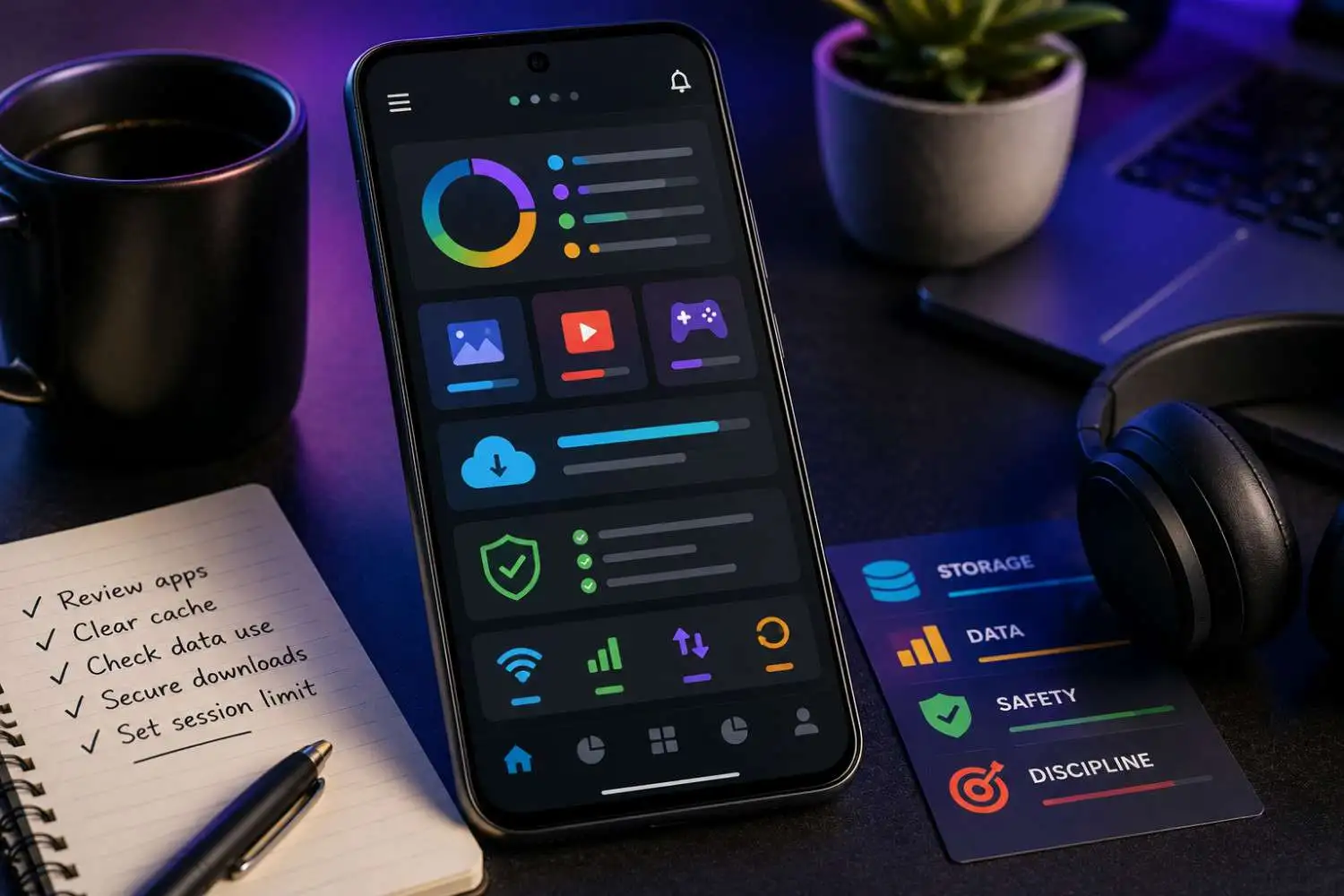
Your smartphone is no longer just a phone. It is a wallet, a TV, a games console and an entertainment hub squeezed into a single device that has to last a full day on one battery charge. That stack of roles puts unusual pressure on the way you manage storage, data and installations. Most users only notice the problem when something goes wrong — a phone that suddenly refuses to update, a data plan that runs dry a week early, an app that asks for permissions it has no business holding. A few practical habits, applied consistently, prevent most of these headaches.
Where Your Storage Really Goes
Free storage on a modern smartphone tends to disappear in three predictable places. The largest share usually goes to media — photos, videos, voice notes, downloaded music and offline streaming caches. The second category covers the apps themselves, particularly those with embedded video or large game assets. The third, often invisible, layer is the cache: temporary files that grow steadily until someone clears them.
The category that punishes a small device the hardest is heavyweight entertainment software. For a search query like 1xbet Somalia, as for any other media-rich mobile platform, the install size is worth checking before you tap download. A well-designed Android package runs lean, optimized for modern ARM processors, and avoids dragging in redundant graphics libraries. The signed build sits on the operator’s official domain, with the version number and supported Android range published openly. Confirming these details before installation takes less than a minute and tells you whether the app has been built for efficiency or simply ported from a desktop version.
Once an app is installed, regular maintenance keeps it lean. Clearing the cache every few weeks, reviewing background data permissions and uninstalling anything untouched for two months together free up gigabytes that would otherwise slow the device.
The Data Plan as a Budget Item
In many emerging markets, mobile data is sold by the megabyte and topped up with weekly bundles rather than purchased as a flat monthly subscription. Even where unlimited plans exist, throttling kicks in once a soft cap is reached. That economic reality changes how apps behave. The most successful platforms in mobile-first regions are built to consume as little data as possible while still delivering smooth performance.
Streamed video and live data feeds sit at the top of the consumption table. Push notifications, by contrast, cost almost nothing. Knowing where your data goes lets you make conscious choices: turning off auto-play, switching to lower video resolutions on cellular networks and reserving heavy downloads for a Wi-Fi window.
A Checklist for Safer Direct Downloads
Apps that live outside the major app stores require the user to take on part of the verification role. The signals are clear once you know where to look.
- The download originates from the official domain of the publisher, not a third-party APK aggregator.
- A cryptographic signature is visible on the download page, ideally with the package version.
- The minimum Android version is stated openly, and the installer refuses to run below that floor.
- Permission requests are reviewed at first launch, with anything unusual flagged before sensitive data is handed over.
- No surprise background installs appear during the first session — only the announced app and its standard updater.
According to figures published by the International Telecommunication Union, the share of internet users worldwide who access the network primarily through a mobile device has grown steadily over the past decade, with the highest concentration in regions where smartphone-only browsing dominates. This shift has pushed many digital services to distribute their apps directly from their own domains, particularly when major app stores restrict the category. Checking a package before installing has become part of basic digital literacy.
Treating Mobile Habits Like Financial Habits
The same discipline that keeps a personal budget intact tends to keep a smartphone running smoothly. Setting a soft limit on the number of installed apps, scheduling a monthly cleanup of unused services and reviewing subscription charges together prevent both storage creep and quiet financial leaks. For services that mix entertainment with real-money transactions, the discipline runs a little deeper. Operators on the other side of the screen retain a structural mathematical edge over time, which means treating each deposit as committed entertainment spend, setting a session limit and stepping away when results sour are habits worth building early. A smartphone that hosts a clean stack of apps and a financial life that runs without surprises tend to follow the same principle: small, consistent reviews beat large, panicked cleanups every time.